Lesson date: 9/8/5854AA
Verse 1 – Once again we see this well known admonition, “Guard all the commands”. Shamar – H8104 appears in 139 passages of scriptiure in Torah; Genesis – 15 times; Exodus – 24 times; Leviticus – 16 times and 19 in Numbers = 74 times. But it appears in Debarim 65 times, almost as much as the other four books combined. Maybe this is important. Everytime I hear this word it reminds me of guard duty in the military. Here I was at 18, 19 and 20 years old holding an M-16, in a strange country, at night, hearing sounds I had in most cases never heard before at night, responsible for protecting “my family”, which was my team.
Here we are in the world, hearing strange sounds, mostly accusations, guarding the commands of the living Elohim, defending our families against our enemies with the Torah, the Word of Elohim. Remember the times we have talked about the phrase “When you go to war” not if? We are in a spiritual war and we cannot afford to lose. Yes, some of our enemies are giants but we cannot let that scare us. Guard all the commands!
Verse 2-8 – “set up for yourselves large stones, and plaster them with plaster,”. This sounds like an odd command but is it really. We are likened to individual stones or buuilding blocks in Yah’s Kingdom. Yeshua is the chief cornerstone thatt the builders rejected. But why plater them? Just for the sake of writing on them? Not really. In Hebrew thinking the act of plastering was to place a protective “skin” on the stones, in other words, flesh. These stones represented the 12 tribes of Israel, living breathing people. By plastering the stones and then writing Torah on them it represented YHVH writing His Torah on our hearts: Jer 31:33 “For this is the covenant I shall make with the house of Yisra’ĕl after those days, declares יהוה: I shall put My Torah in their inward parts, and write it on their hearts. And I shall be their Elohim, and they shall be My people.
2Co 3:2 You are our letter, having been written in our hearts, known and read by all men,
2Co 3:3 making it obvious that you are a letter of Messiah, served by us, written not with ink but by the Spirit of the living Elohim, not on tablets of stone but on fleshly tablets of the heart.
Next, the were to do this again when they reached Mount Eybal: Jos 8:30 And Yehoshua built an altar to יהוה Elohim of Yisra’ĕl in Mount Ěyḇal,
Jos 8:31 as Mosheh the servant of יהוה had commanded the children of Yisra’ĕl, as it is written in the Book of the Torah of Mosheh, “an altar of unhewn stones over which no man has wielded iron.” And they offered on it burnt offerings to יהוה, and slaughtered peace offerings.
Jos 8:32 And there, in the presence of the children of Yisra’ĕl, he wrote on the stones a copy of the Torah of Mosheh, which he had written.
In Debarim 27:5 and Joshua 8:31 we see it specifically mentioned that the altar was constructed of stones that had not been cut with iron. Why?
What did Sha’ul mean when he wrote these words: Gal 3:13 Messiah redeemed us from the curse of the Torah, having become a curse for us – for it has been written, “Cursed is everyone who hangs upon a tree.”?
Look in verse 6 and notice the word “complete” stones. The word for complete is shalem – H8003 – שָׁלֵם – shâlêm – shaw-lame’ – From H7999; complete (literally or figuratively); especially friendly. (shalem used by mistake for a name.): – full, just, made ready, peaceable, perfect (-ed), quiet, Shalem [by mistake for a name], whole.
2Pe 3:14 So then, beloved ones, looking forward to this, do your utmost to be found by Him in peace, spotless and blameless,
“In peace, spotless and blameless” fairly well describes the word shalem.
1Pe_2:5 you also, as living stones, are being built up, a spiritual house, a set-apart priesthood, to offer up spiritual slaughter offerings acceptable to Elohim through יהושע Messiah.
WARNING: What comes next is a very important time marker that is missed by most Bible (Greek) scholars.
Verse 9 – This day you have become the people of יהוה your Elohim,
What is so significant about this phrase, not even a full verse but a part of a verse? Here: Dan 9:19 “O יהוה, hear! O יהוה, forgive! O יהוה, listen and act! Do not delay for Your own sake, my Elohim, for Your city and Your people are called by Your Name.” …Dan 9:24 “Seventy weeks are decreed for your people and for your set-apart city, to put an end to the transgression, and to seal up sins, and to cover crookedness, and to bring in everlasting righteousness, and to seal up vision and prophet, and to anoint the Most Set-apart.
Please, if you go back and read this prayer, read the whole prayer. It is one of the most beautiful prayers found in scripture, second only, in my opinion, to the one prayed by Yeshua in the Garden of Gethsemane in John 17.
Before I move on I want to point out a couple of things in verse 8 – after the word stones is (H853). Second, the words plainly and well come from two different root words; H874 – בָּאַר – bâ’ar – baw-ar’
A primitive root; to dig; by analogy to engrave; figuratively to explain: – declare, (make) plain (-ly).
And: H3190 – יָטַב – yâṭab – yaw-tab’ – A primitive root; to be (causatively) make well, literally (sound, beautiful) or figuratively (happy, successful, right): Joh 16:25 “These words I have spoken to you in figures of speech, but an hour is coming when I shall no longer speak to you in figures of speech, but I shall declare the Father plainly to you.
Verses 9-10 – “Be silent and hear, O Yisra’ĕl: Be silent: H5535 – סָכַת – sâkath – saw-kath’ – A primitive root; to be silent; by implication to observe quietly: – take heed. ((This word is only used this one time in scripture.))
H8085 – שָׁמַע – shâma‛ – shaw-mah’ – A primitive root; to hear intelligently (often with implication of attention, obedience, etc.; causatively to tell, etc.):
It is very hard to listen when you yourself are talking: Psa 46:10 Be still, and know that I am Elohim; I am exalted among nations, I am exalted in the earth!
Lam 3:26 It is good – both to wait and to be silent, For the deliverance of יהוה. Although similar, the word for silent here is from a different root word Damam – H1748.
2Ti 4:3 For there shall be a time when they shall not bear sound teaching, but according to their own desires, they shall heap up for themselves teachers tickling the ear,
2Ti 4:4 and they shall indeed turn their ears away from the truth, and be turned aside to myths.
Verses 12-13 – Please notice the order that the names of the tribes are given. First, Shimon, Levi, Yehudah, Yissakar, Yoseph and Binyamin. ((We have heard and are joined to(gether) to be praised, but there is recompense, let Him (YHVH) add a Son of (to) the Right Hand.
Next, Reuben, Gad, Asher, Zebulun, Dan, Naphtali. ((Behold a Son in the troop, a joyful One, who is exalted as a Judge and is wrestling for us.
Lesson date:12/17/5857AA
It was not until I wrote the date down that I realized how long I have been out of the loop. It was just after the New Moon Report that I began to feel ill but began really feeling bad around the 9 or 10 of February. I was so sick I couldn’t even remember to tell my sister “Happy Birthday!” By the weekend both Von and I were very sick and knew not to try and go to Louisiana for Mom’s 100th birthday. Last Shabbat and weekend, we slept almost continuously for 48 hours. We were two very sick puppies. We appreciate everyone’s concern and prayers.
While trying to recuperate this week my thoughts always go back to Torah and I understand how David felt about Yah’s Word: Psa 1:1 Blessed is the man who shall not walk in the counsel of the wrong, And shall not stand in the path of sinners, And shall not sit in the seat of scoffers,
Psa 1:2 But his delight is in the Torah of יהוה, And he meditates in His Torah day and night.
Thinking on Torah? How do we do it? What sparks our imagination to think on Torah? Is it simple? Complicated? Is it an actual “process” to be quantified and taught? For most of the answers to my own personal questions the answer is “I don’t know”. Let me give you an example: About 10 or more years ago, trying to lead a small study of Torah, the name of the book I was studying suddenly clicked in my head and an alarm bell went off. I was reading Shemoth Chapter 1 when I suddenly realized I was being given important clues in the names of the Patriarchs. I broke down the names and Wow! For the first time saw the message as plain as day.
Since that day I have tried various ways of seeing what YHVH wants me to learn from His Word. It has involved a lot of sleepless nights. Sometimes, it is so very easy to “over” think the problem and get bogged down and even frustrated in the study of a chapter. ((This is one reason I seldom do more than one chapter at a time, to avoid losing focus and getting bogged down.))
Look at the word “bogged” above. I use it as an example, “One man’s bog is another man’s fireplace.” A bog is a low wet place where moisture is very near the surface and would cause horses, oxen and wagons to get stuck in the 10+ meter deep peat bogs in Ireland or to “get bogged down”. Yet, the thing about the bog was that it could be cut by hand, stacked and dried and burned for fuel since most of the trees had already been cut over. What does this have to do with Torah, right?
We learned early on that our goal in Torah was to “Hear”; “Guard”; and “Do” Torah: Deu_4:6 “And you shall guard and do them, for this is your wisdom and your understanding before the eyes of the peoples who hear all these laws, and they shall say, ‘Only a wise and understanding people is this great nation!’
Deu_5:1 And Mosheh called all Yisra’ěl, and said to them, “Hear, O Yisra’ěl, the laws and right-rulings which I speak in your hearing today. And you shall learn them, and guard to do them.
Deu_6:3 “And you shall hear, O Yisra’ěl, and shall guard to do, that it might be well with you, and that you increase greatly as יהוה Elohim of your fathers has spoken to you, in a land flowing with milk and honey.
Deu_7:12 “And it shall be, because you hear these right-rulings, and shall guard and do them, that יהוה your Elohim shall guard with you the covenant and the loving-commitment which He swore to your fathers,
Deu_31:12 “Assemble the people, the men and the women and the little ones, and your sojourner who is within your gates, so that they hear, and so that they learn to fear יהוה your Elohim and guard to do all the Words of this Torah.
Every verse of Torah that encapsulates the ideas of Hearing Torah; Guarding Torah; and Doing Torah is found in Debarim. Why?
What one word do we see associated with Torah most often? H8104 – שׁמר – shâmar – BDB Definition:
1) to keep, guard, observe, give heed
If “shamar” is very commonly associated with Torah, what is it rate of occurrence in Torah. In other words, is it found equally dispersed throughout the 5 Books of Torah? No!
It is used 148 times in 139 verses in the Torah –
15 times in 15 verses in Berěshith/Genesis, ((about 10%))
25 times in 24 verses in Shemoth/Exodus; ((about 17%))
16 times in 16 verses in Wayyiqra/Leviticus; ((about 10%))
19 times in 19 verses in Bemiḏbar/Numbers and ((about 13%))
73 times in 65 verses in Deḇarim/Deuteronomy. ((about 49.3%))
Is this a significant number to me, you or any serious student of Torah? When half of all occurences of the word “Shamar” in Torah are found in one book alone, I have no choice but to believe it is for a reason. What is the reason? Or, to ask the question another way, “Why is it so important for me to hear the word “shamar” repeated so many times with regard to Torah? Here is part of the answer: There are approximately 7.5 billion people in the world today. Of that number about 2.5 billion people profess to being “Christian”. So, roughly 1/3 of the people in this world profess to being either Eastern Orthodox, Roman Catholic or one of the denominations of the Roman Catholic Church’s 44,000 Protestant Daughters. Now, more than ever, it is vitally important for me to hear: Deu_31:12 “Assemble the people, the men and the women and the little ones, and your sojourner who is within your gates, so that they hear, and so that they learn to fear יהוה your Elohim and guard to do all the Words of this Torah.
Folks, I claim nothing more than to be a sojourner within the gates of Yisra’el. That’s all. I am not worthy to be called a Levite, I am not worthy to be called of Ephrayim and, I am not worthy of being called Mannesheh. At most I call myself a sojouner within the gates of Yisra’el. Period! Most of my physical life I was force fed a diet of GRACE soup, Grace (unclean) meats, Grace fruits, Grace vegetables and Grace Liquor. My brain was so soaked and sodden on Grace I could not see that my Creator was still the same Elohim that had been from the beginning. His Name was YHVH, not God, not Jesus but YHVH. He is the same Yesterday, Today and Forever and has not changed His mind on what it takes to enter His Kingdom and sent His Son to testify to that fact.
I apologize because this is not a true Torah Study but, rather it is a study of my relationship to Torah. I have sinned and come short. How do I know that? Because I can find my shortcomings in Torah. Do I deserve to die ((curse of Torah?)) Yes, I do: Gal 3:13 Messiah redeemed us from the curse of the Torah, having become a curse for us – for it has been written, “Cursed is everyone who hangs upon a tree.” –
Gal 3:14 in order that the blessing of Aḇraham might come upon the nations in Messiah יהושע, to receive the promise of the Spirit through belief.
Verses 2-8 – They were to build a monument to their crossing of the Yarden of uncut stones and plaster them and then write the words of this Torah on the stones. I actually had one of these, well, not exactly like this one but you can find mine in Scripture as well: Mat 23:27 “Woe to you, scribes and Pharisees, hypocrites! Because you are like whitewashed tombs which outwardly indeed look well, but inside are filled with dead men’s bones and all uncleanness.
Mat 23:28 “So you too outwardly indeed appear righteous to men, but inside you are filled with hypocrisy and lawlessness.
You see, I knew all the “righteous” words and phrases to throw out so people would know that I was righteous. The problem was Verse 28 because even as I said and did those things I knew they were indeed hypocritical and were men’s ideas of righteousness not Torah based righteousness.
They were to build one at the river crossing and one at Mount Eybal. Why were they not to be cut by an iron tool? Why white wash the stones? So, people will see the words better? 2Co 3:1 Are we to begin to recommend ourselves again? Or do we need, as some, letters of recommendation to you, or from you?
2Co 3:2 You are our letter, having been written in our hearts, known and read by all men,
2Co 3:3 making it obvious that you are a letter of Messiah, served by us, written not with ink but by the Spirit of the living Elohim, not on tablets of stone but on fleshly tablets of the heart.
Verse 9-10 – This is big and goes forward into time: Dan 9:24 “Seventy weeks are decreed for your people and for your set-apart city, to put an end to the transgression, and to seal up sins, and to cover crookedness, and to bring in everlasting righteousness, and to seal up vision and prophet, and to anoint the Most Set-apart.
A phrase here is translated “nicely” and that is the phrase “be silent and hear” which in Hebrew is: הַסְּכֵת וּשְּׁמַע – hakseth ushma’a – what it really says is “shut up and listen”.
Verses 12-13 – Shim’on, Levi, Yehudah, Yissakar, Yoseph and Binyamin. Why? What is the relationship dynamic taking place?
Likewise – Re’uben, Gad, Asher, Zebulun, Dan and Naphtali.
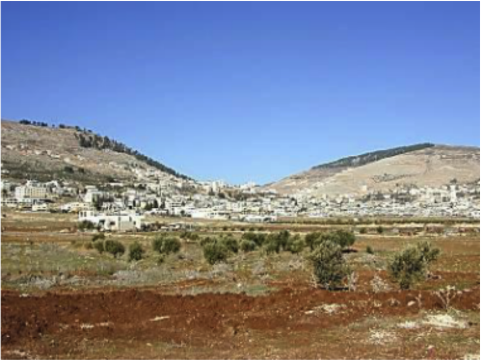
Mt. Gerizim on the Left and Mt. Eybal on the Right and Shekem in the valley. What is the valley called?
What attribute is represented by the root word for Gerizim? Mt. Eybal?
Verse 15 – No idols! Say this another way:???
Verse 16 – Honor your father and mother: Mat 15:4 “For Elohim has commanded, saying, ‘Respect your father and your mother,’ ‘He who curses father or mother, let him be put to death.’
Mat 15:5 “But you say, ‘Whoever says to his father or mother, “Whatever profit you might have received from me has been dedicated,”
Mat 15:6 is certainly released from respecting his father or mother.’ So you have nullified the command of Elohim by your tradition.
Verse 17 – Love your neighbor.
Verse 18 – Cursed are false teachers.
Verse 19 – Even angels will die for this sin.
Verse 20 – Do not sleep with your father’s wife. (Re’uben above.) 1Co 5:1 It is commonly reported that there is whoring among you, and such whoring as is not even named among the nations, so as one to have his father’s wife!
Verse 21 – Beastiality. Now legal according to the UCMJ.
Verse 22 – No incest!
Verse 23 – Do not have sex with your mother-in-law.
Verse 24 – No gossiping or backstabbing.
Verse 25 – Verses 20 – 23 deal with perverted sex. Verses 24-25 deal with perverted justice.
Verse 26 – Establish Torah! Or Stand with Torah, By Torah and On Torah.
Ahavah vberakhot
 CahalTx